
From the Sublime to the Ridiculous, Yuzen/Tsutsugaki, Freehand Paste-Resist Textiles, 1700–1920
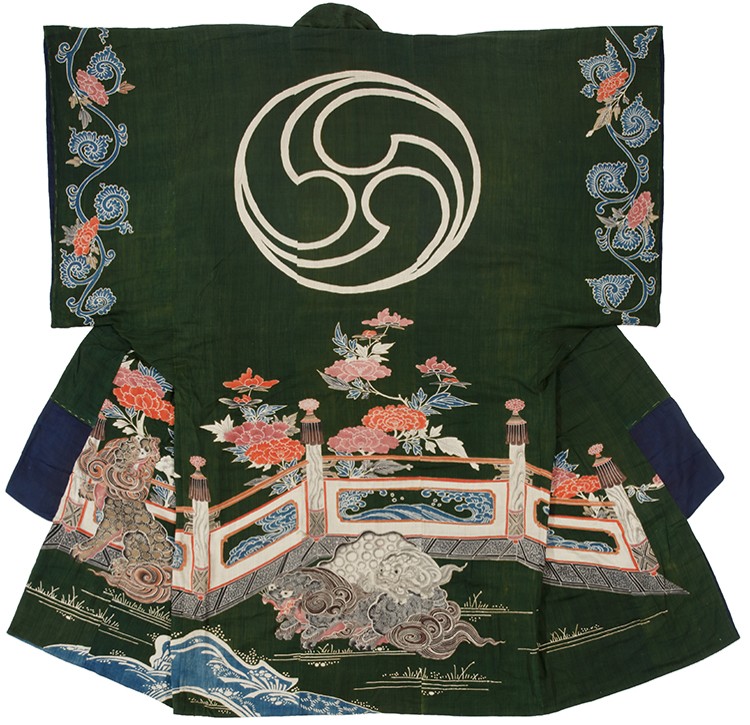
Yogi, kimono-shaped padded futon cover, first half 19th century, tsumugi silk. Possibly made in Kaga, famous for yuzen, and likely part of a wedding set.The fine resist drawing, extensive sumi ink detail and complex, naturalistic brushed pigment shading plus the luxurious silk with a green background is an example of the height of tsutsugaki craftsmanship at the apex of the technique’s trajectory in the late Edo period.
David Paly
Saturday, November 14, 2026
1:00pm @ Zoom
The technique of yuzen, freehand paste resist pictorial dyeing before brushed color pigment application, emerged in the late 17th century in urban dye shops. Used principally for women’s garments on silk and fine bast fibers, it was the most popular technique for luxury fabrics in mid-late Edo Japan.
By the beginning of the 19th century demand had grown among merchant and rural customers for decorated cloth for dress and ritual consumption, especially wedding cloths. Using the same technique of drawing with paste filled cones (tsutsugaki), many prestigious and allegorical designs were drawn on cotton, raw silk and bast fibers for garments, futon covers, trappings and banners for these newly affluent classes. This presentation seeks to compare these objects and highlight the similarities of the cloths that are customarily grouped separately.
David Paly has spent more than forty years building a collection of over 300 examples of tsutsugaki, which he hopes will form the basis of a future catalogue on the subject. A recently retired anesthesiologist, he lives with his wife, Marita, between Gig Harbor, Washington, and Paracas, Peru.