
Uzbek Khan Atlas and the Kremlin: A Dialogue of Architecture, Textiles, and Politics
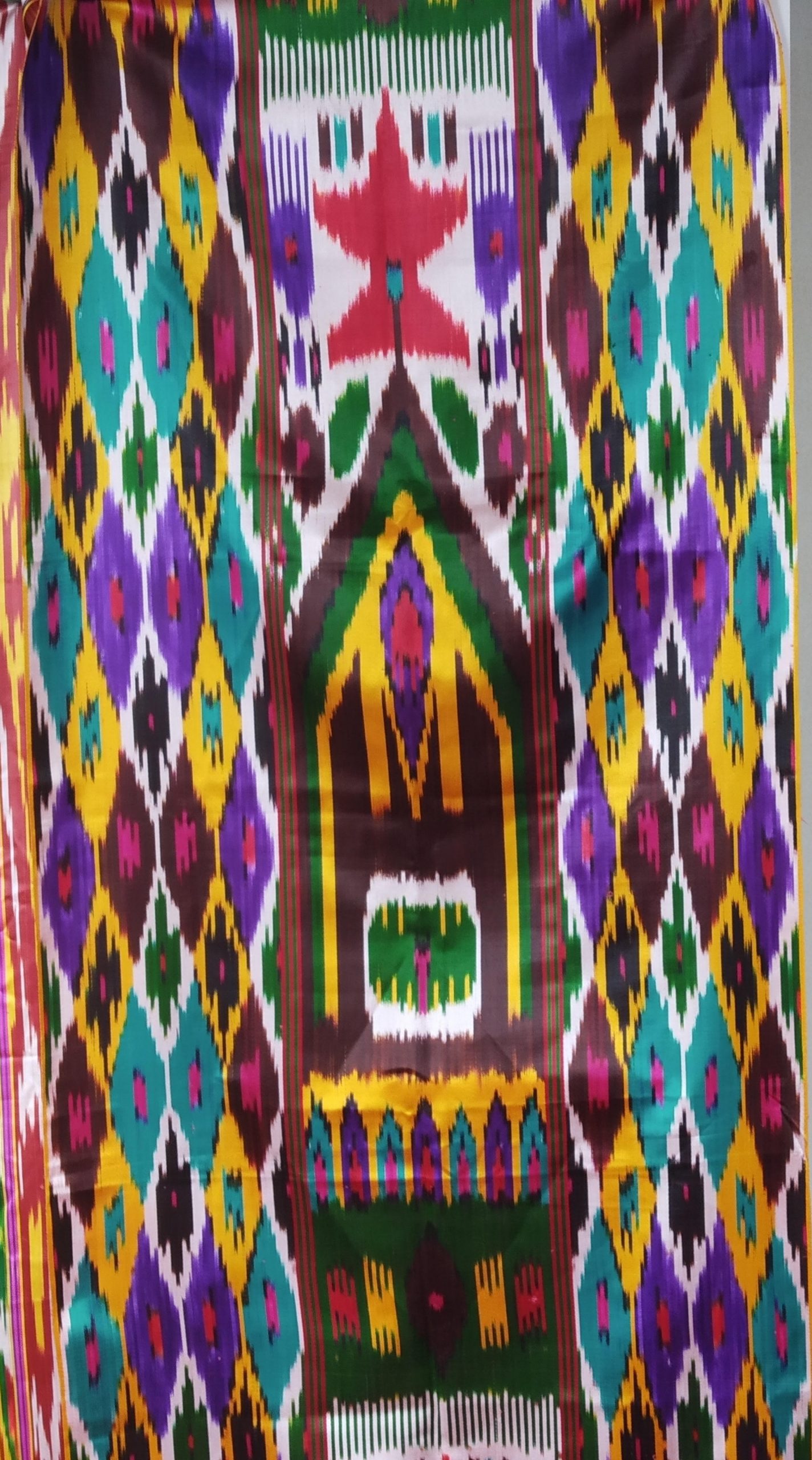
Irina Bogoslovskya
Saturday, October 17, 2026
11:00am @ Zoom
Join us for a fascinating Zoom lecture with distinguished art historian Dr. Irina Bogoslovskaya, who will explore one of the most unexpected intersections of textile design, politics, and cultural identity in twentieth-century Central Asia.
During the Soviet period, motifs celebrating contemporary Soviet life and ideology found their way into Uzbekistan’s traditional folk arts. Among the most remarkable examples are khan atlas silks featuring the Kremlin’s iconic Spasskaya Tower. Its linear architecture, bold contours, and famous red star provided an ideal template for adaptation into the vibrant language of Uzbek ikat weaving. At once a symbol of Soviet power and one of Uzbekistan’s greatest artistic traditions, these textiles embodied both political messaging and extraordinary creative innovation.
Once widely produced but largely forgotten after the early 1990s, these striking designs have only recently been rediscovered. Drawing on decades of ethnographic research and the discovery of dozens of surviving examples, Dr. Bogoslovskaya will examine their artistic significance, political symbolism, and lasting legacy within Central Asian textile history.
Dr. Irina Bogoslovskaya is an Uzbek art historian and internationally recognized specialist in the textiles and decorative arts of Central Asia. She served for many years as Senior Research Associate at the National Art Museum of Uzbekistan and has devoted her career to the study of traditional weaving, costume, and folk art. Her extensive fieldwork and publications have significantly advanced the understanding of Uzbek textile traditions and their cultural history.
Now based in Istanbul, Dr. Bogoslovskaya continues her research, lectures internationally, and is regarded as one of the foremost authorities on Central Asian textiles.